


The Federal Government has announced plans to roll out expanded agricultural programs, including NAGS 2.0 and a new Japan International Cooperation Agency (JICA)-supported initiative, following the successful production of 2,536,184 metric tonnes of staple food crops under the National Agricultural Growth Scheme and Agro Pocket (NAGS-AP).
Dr. Aliyu Abdullahi, Minister of State for Agriculture and Food Security, made the disclosure on Thursday during a stakeholders’ workshop in Abuja designed to review project achievements and prepare for expanded implementation under a modified framework.
Record Output Across Key Crops
According to Abdullahi, the NAGS-AP project recorded output across multiple season, including dry and wet season cultivation of wheat, rice, maize, soybeans, millet, and cassava, generating produce valued at approximately ₦2.31 trillion, strengthening food availability and helping stabilize food prices nationwide.
“Currently, food prices are declining, and efforts are being made to address the high cost of agricultural inputs to balance input and output costs,” Abdullahi said.
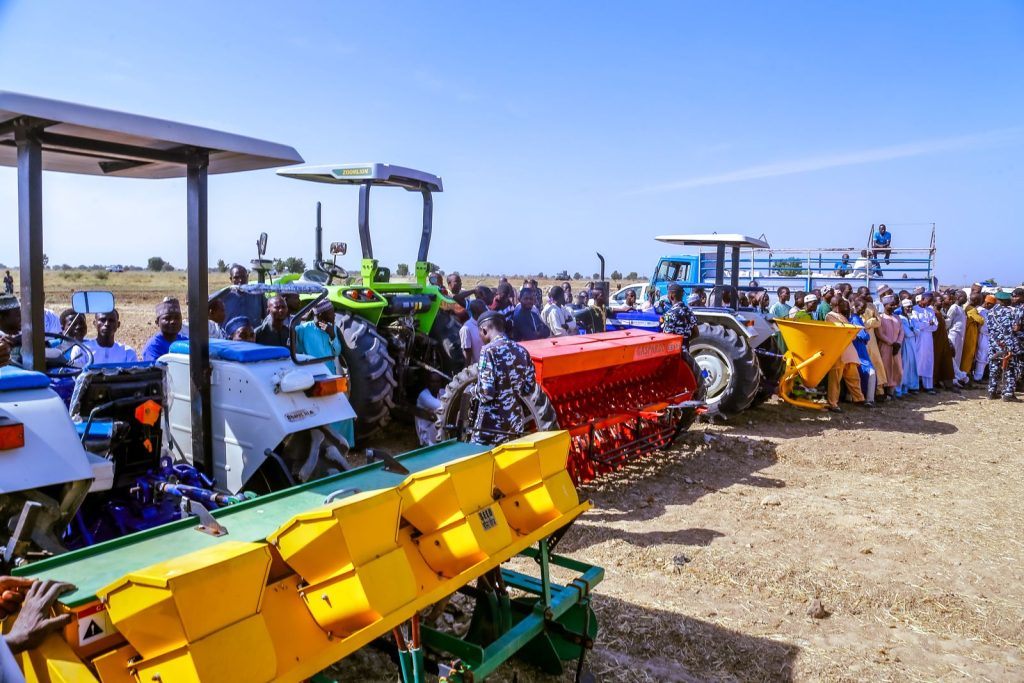
The scale of production follows earlier government initiatives that expanded mechanised farming and input support as part of broader efforts to increase agricultural value and rural incomes.
MSME platform
At the workshop, co-organized with the Bank of Agriculture (BOA),stakeholders reviewed lessons learned and outlined modifications to improve implementation, efficiency, and long-term impact across Nigeria’s agricultural sector.
Abdullahi said the government is finalising arrangements to commence implementation of the JICA loan project, which will focus on rice, maize, soybean and cassava production, alongside NAGS 2.0, which will prioritise wheat and rice beginning with the 2026 wet season.
He noted that under the 2025–2026 dry season, the project will extend to rice, maize and cassava production across all 36 states and the Federal Capital Territory (FCT).
The workshop also heard from Dr. Marcus Ogunbiyi, Permanent Secretary of the Ministry, and Ishaku Buba, National Project Coordinator of NAGS-AP, who emphasized institutional support, quality input deployment, and tailored extension services to ensure sustainable productivity.
The expanded NAGS initiative and JICA collaboration align with the government’s Agricultural Renewed Hope Agenda, which declared a State of Emergency on Food and Nutrition Security to ensure sufficient, accessible, and affordable food for citizens.
The program provides farmers with critical inputs, institutional support and quality-assured fertilisers and seeds, with government officials stating that input quality control officers will be deployed nationwide to maximize benefits.
What This Means for MSMEs and Agribusiness
For micro, small, and medium enterprises (MSMEs) operating in agribusiness, the expanded programs signal greater access to government-backed financing, improved supply of quality inputs, and broader market opportunities as staple food production increases and value chains deepen. Increased agricultural output supports food processing, logistics, transport services and agri-tech startups, while stabilised food prices can improve consumer purchasing power and business planning confidence.