Federal Government Inaugurates S-VCG, Grants 45 Tertiary Students ₦50m Each
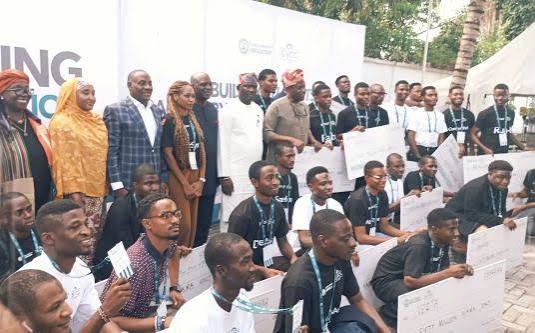
The Federal Government has disbursed ₦50 million each to 45 student innovators selected from 65 finalists drawn from public and private tertiary institutions across Nigeria under the Student Venture Capital Grant (S-VCG), in a major move to strengthen youth-led innovation and entrepreneurship.
Nigerian youth grants
The initiative, unveiled by the Minister of Education, Dr Tunji Alausa, at the UNDP Innovation Hub in Ikoyi, Lagos, signals what the government describes as a deliberate shift in Nigeria’s education policy toward innovation-driven growth. He said the programme reflects a national commitment to positioning young Nigerians at the center of global innovation.
According to him, the S-VCG goes beyond funding, as it offers equity-free capital alongside mentorship, incubation support, and access to digital tools to help student entrepreneurs transition from ideas to viable businesses.
He explained that the programme, administered through the Federal Ministry of Education, is designed to identify and support student-led startups capable of addressing real national challenges in sectors such as agriculture, healthcare, logistics, and financial technology. He added that the initiative aims to transform classrooms into innovation hubs where ideas are nurtured into impactful solutions.
The minister noted that the beneficiaries emerged from a rigorous selection process that began with over 30,000 applications from more than 400 tertiary institutions across the country. After a three-day bootcamp, finalists pitched their innovations before a panel of industry experts, with 45 students ultimately selected for the grant.
Alausa emphasized that the long-term goal is to shift Nigerian graduates from job seekers to job creators, saying the programme is part of a broader strategy to harness youth potential for economic transformation through innovation and skills development.
He also highlighted the importance of collaboration, acknowledging the support of partners such as the United Nations Development Programme (UNDP), Google, and the Bank of Industry, whose involvement he said has strengthened the initiative and expanded opportunities for young innovators.
In her remarks, the Minister of State for Education, Prof. Suwaiba Ahmad, described student entrepreneurship as a critical strategy for national development, stressing that academic knowledge must be complemented with practical problem-solving skills. She noted that more students are now building businesses while still in school, a trend she said is essential for competitiveness in a changing global economy.
According to her, student-led enterprises have the potential to drive job creation, promote innovation, and support economic diversification across key sectors such as agriculture, technology, healthcare, and the creative industry.
Also speaking, the Minister of Communications and Digital Economy, Dr Bosun Tijani, commended the initiative, describing it as a shift from theoretical learning to practical innovation. He advised the beneficiaries to focus on building sustainable solutions rather than chasing short-term rewards, encouraging consistency and long-term thinking in their entrepreneurial journey.
Economic trend reports
He emphasized that meaningful innovation requires patience and discipline, noting that small, consistent efforts can compound into impactful outcomes over time.
Representing the United Nations Development Programme, Ms Elsie Attafuah praised the Federal Government’s commitment to investing in young innovators, describing the programme as a step toward building a system that prioritizes skills, creativity, and real-world impact.
She urged the beneficiaries to remain committed to refining their ideas, engaging with markets, and adapting to feedback, adding that their role extends beyond personal success to contributing to national development through solutions that address pressing societal needs.
The S-VCG initiative marks a significant step in Nigeria’s efforts to integrate innovation into education, with expectations that it will help nurture a new generation of entrepreneurs capable of driving economic growth and creating sustainable opportunities across the country.
Nigerian youth grants